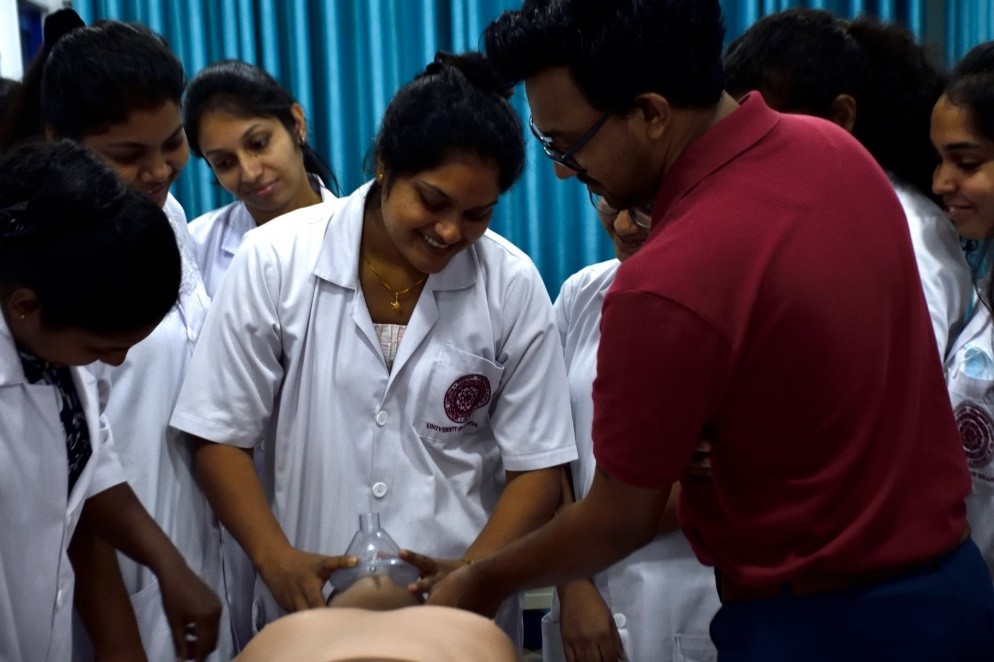




The Emergency Care Management – Basic Life Support (BLS) and Restart a Heart Programme 2024
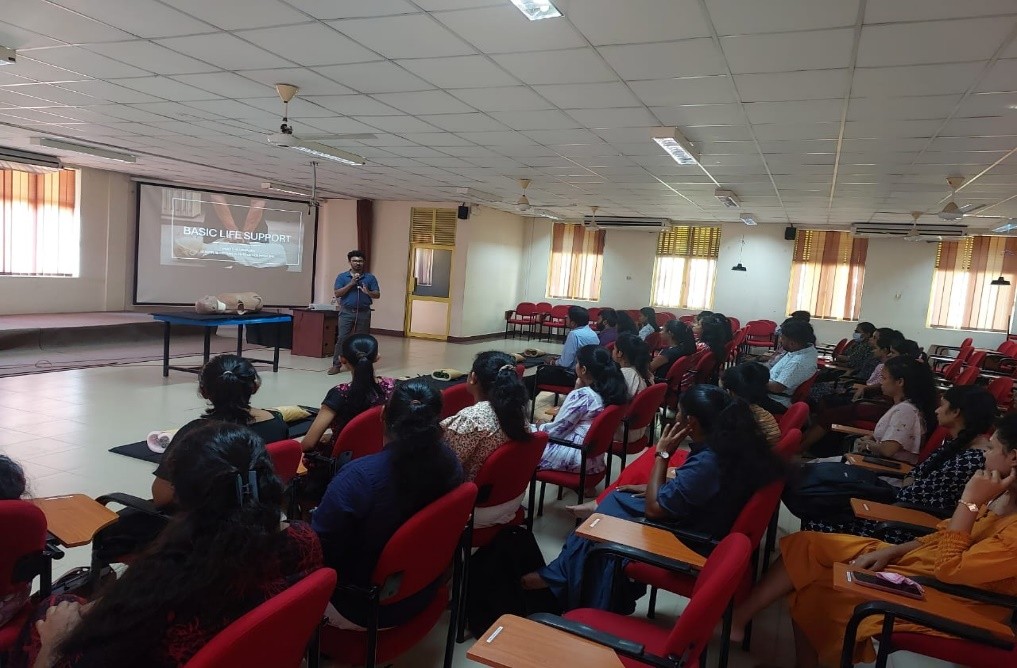
The Emergency Care Management – Basic Life Support (BLS) and Restart a Heart Programme 2024 workshop, conducted jointly by the Clinical Simulation Training Center (CSTC) and the Resuscitation Council of Sri Lanka at the Gampaha Wickramarachchi University of Indigenous Medicine, was held on 28th March, 04th April, and 24th April 2024 as an international-level training programme for academics and BAMS final-year undergraduates.
The Resuscitation Council of Sri Lanka is the national professional body responsible for promoting best practices in resuscitation and emergency cardiovascular care in Sri Lanka. It operates under the College of Anesthesiologists and Intensivists of Sri Lanka and works in collaboration with international resuscitation organizations to ensure that local guidelines align with global standards. The council is actively involved in developing resuscitation guidelines, conducting training programmes such as Basic Life Support (BLS) and Advanced Life Support (ALS), and raising public awareness on life-saving techniques like cardiopulmonary resuscitation (CPR) and automated external defibrillator (AED) use. Through initiatives like the “Restart a Heart” programme, it aims to empower healthcare professionals and the general public with the knowledge and skills needed to respond effectively to medical emergencies and improve survival outcomes.
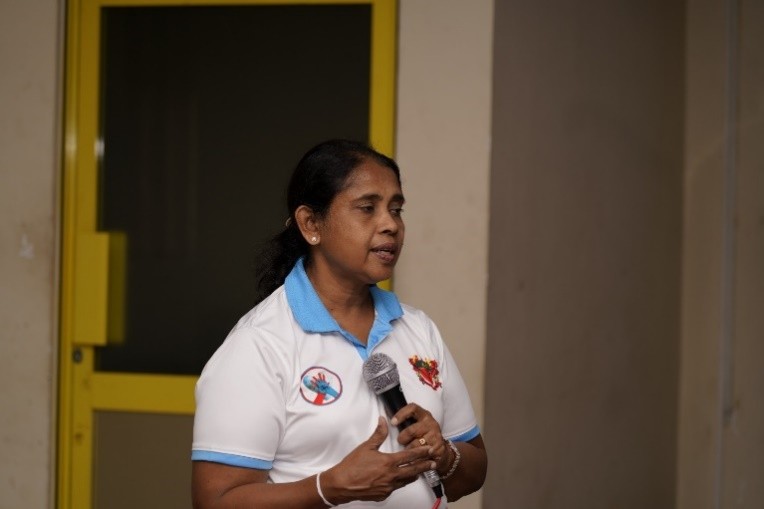
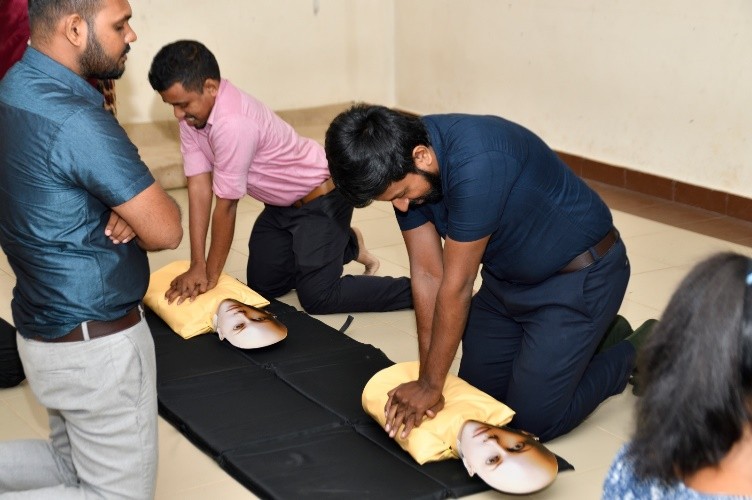
The workshop aimed to equip participants with essential life-saving skills through both theoretical knowledge and hands-on training in CPR, AED use, airway management, trauma care, and emergency response for adults, children, and infants. It was conducted under the guidance of resource persons Dr. Nilmini Wijesuriya and Dr. Muditha Nissanka, who delivered expert instruction and practical demonstrations. Emphasis was placed on teamwork, communication, and effective decision-making in emergency situations. With the participation of 20 academics and 104 students, the programme successfully enhanced participants’ confidence, competence, and preparedness to manage medical emergencies, contributing to improved healthcare outcomes and community safety.
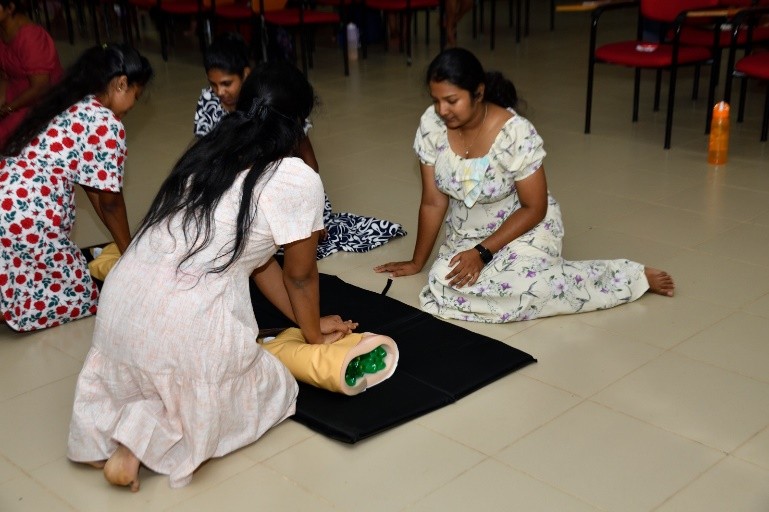
To overcome the lack of costly training equipment, low-budget CPR manikins were innovatively designed by Mrs. Darshika Attanayake and Dr. Lislie Ranaweera using recycled materials, while 10 CPR with AED training manikins were temporarily provided by the council for academic training. This cost-effective initiative ensured continuous practical training, saved significant university funds, and enhanced students’ confidence and competence in life-saving skills, contributing to improved emergency preparedness and community safety.